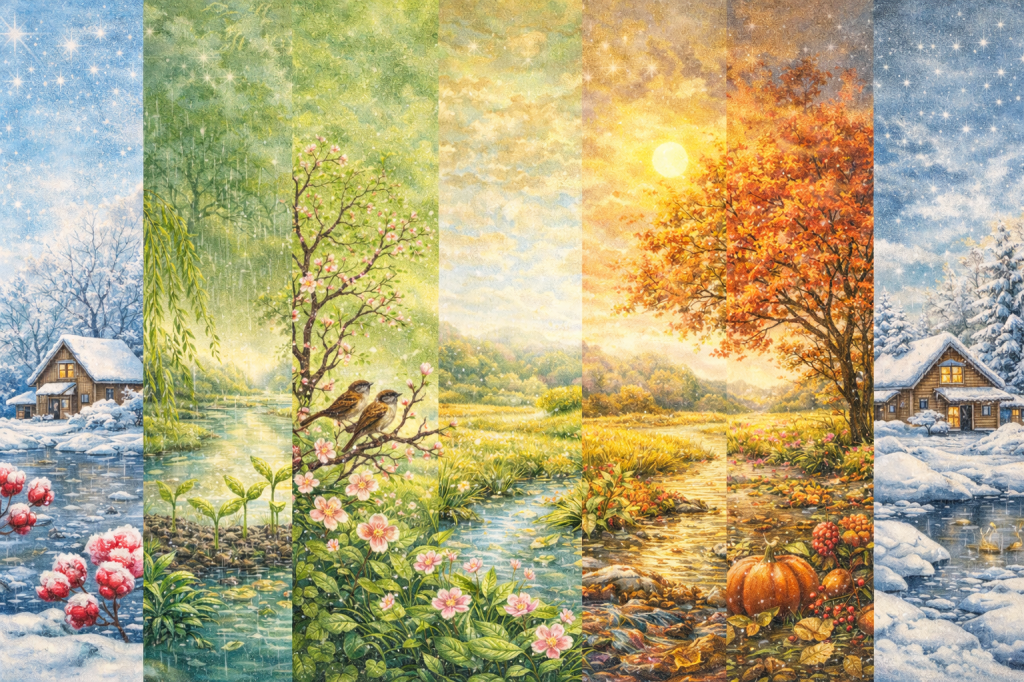
Nature is a gradual, subtle conversation. In ancient China, people observed tiny shifts of the sun, the moon, the wind, the soil, and the behaviour of insects, and from these observations they developed the 24 Solar Terms.
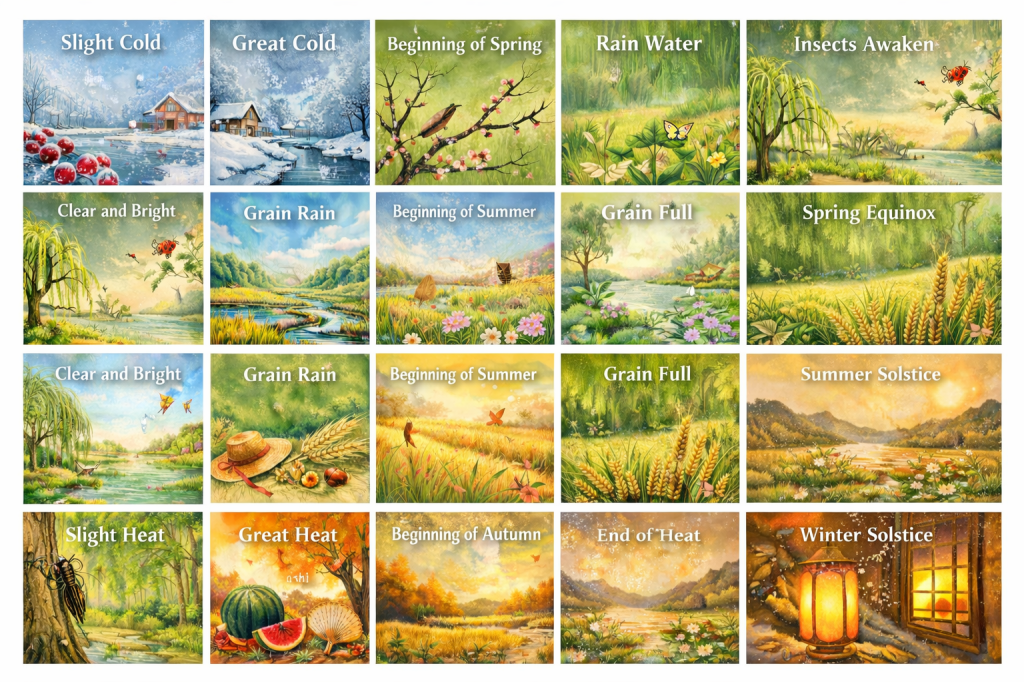
Think of them as 24 mini seasons. Imagine the 4 Seasons as your map, but the 24 Solar Terms are your map key. This system started as a guide for farmers to ensure a good harvest. Ancient farmers couldn’t afford to guess. Planting seeds too early – They would freeze. Too late – They would miss the harvest window.
So they didn’t wait for a “calendar date,” instead they watched for subtle signs, and asked the questions:
- When did the first insects wake?
- When did the soil texture change?
- When did the wind shift direction?
Each of these observations helped to create the picture of the year and clearly marked its changes.
The survival of these people depended on reading nature with precision, over time this knowledge grew and was eventually adopted by Traditional Chinese Medicine, where it was applied to the systems and cycles of the human body:
Now, you might wonder how does an ancient farmer’s clock help you when you experiencing a -10°C cold snap? When you follow the 24 Solar Terms, you aren’t just reacting to the thermometer on the day it gets cold, you are supporting your body’s energy through these climatic shifts.
By the time the extreme hits, your internal foundation is prepared and all the different elements of your health are primed weeks in advance. By noticing the subtle signs of nature you are prepared to adjust to what is coming your way.
Think of it this way the 4 Seasons give you 4 general strategies for the year, while the 24 Solar Terms give you 24 tools to precisely adjust the way you act in the world.
This gives you more options to be more resilient, to feel more comfortable and to live in harmony with the changing seasons of the world and the weather.
Look out for future Blogs for each of the 24 Solar Terms, Starting with Li Chun
Spring
- Beginning of Spring — Lìchūn (立春): 4 February 2026
- Rain Water — Yǔshuǐ (雨水): 18 February 2026
- Insects Awaken — Jīngzhé (惊蛰): 5 March 2026
- Spring Equinox — Chūnfēn (春分): 20 March 2026
- Clear and Bright — Qīngmíng (清明): 5 April 2026
- Grain Rain — Gǔyǔ (谷雨): 20 April 2026
Summer
- Beginning of Summer — Lìxià (立夏): 5 May 2026
- Grain Full — Xiǎomǎn (小满): 21 May 2026
- Grain in Ear — Mángzhǒng (芒种): 5 June 2026
- Summer Solstice — Xiàzhì (夏至): 21 June 2026
- Slight Heat — Xiǎoshǔ (小暑): 7 July 2026
- Great Heat — Dàshǔ (大暑): 23 July 2026
Autumn
- Beginning of Autumn — Lìqiū (立秋): 7 August 2026
- End of Heat — Chǔshǔ (处暑): 23 August 2026
- White Dew — Báilù (白露): 7 September 2026
- Autumn Equinox — Qiūfēn (秋分): 23 September 2026
- Cold Dew — Hánlù (寒露): 8 October 2026
- Frost’s Descent — Shuāngjiàng (霜降): 23 October 2026
Winter
- Beginning of Winter — Lìdōng (立冬): 7 November 2026
- Light Snow — Xiǎoxuě (小雪): 22 November 2026
- Great Snow — Dàxuě (大雪): 7 December 2026
- Winter Solstice — Dōngzhì (冬至): 22 December 2026
- Slight Cold — Xiǎohán (小寒): 5 January 2027
- Great Cold — Dàhán (大寒): 20 January 2027
 WhatIsThePoint.net