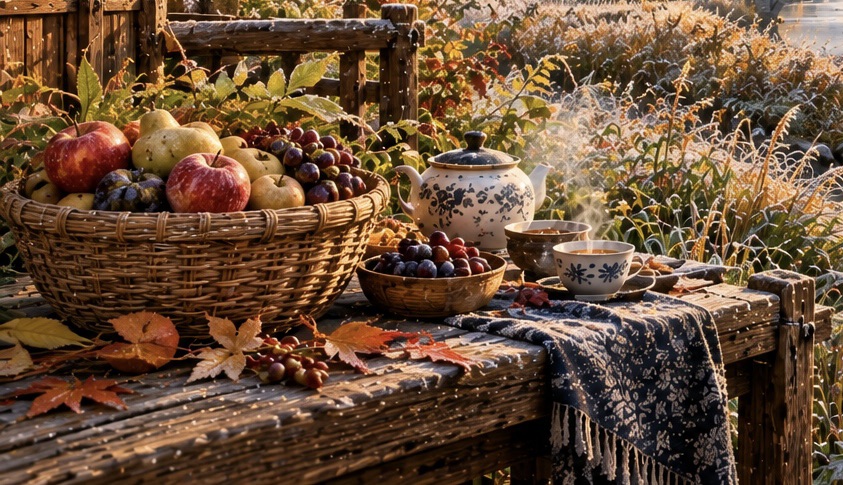
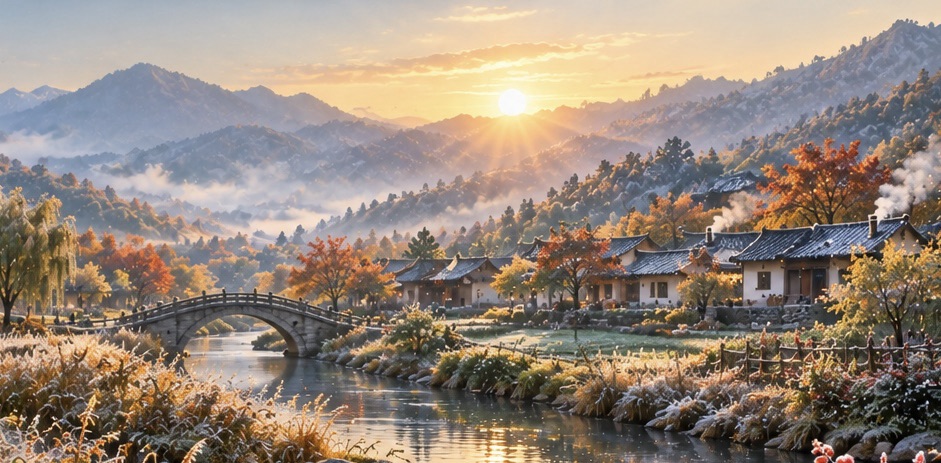
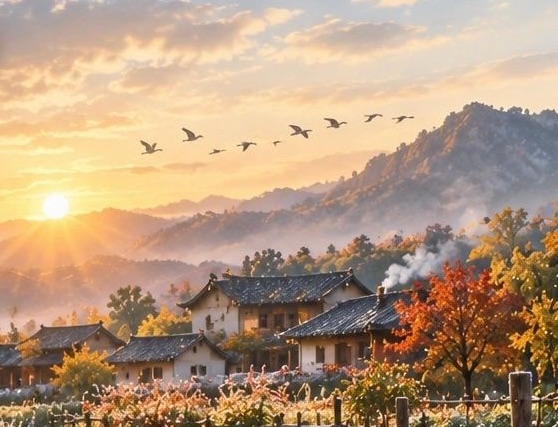
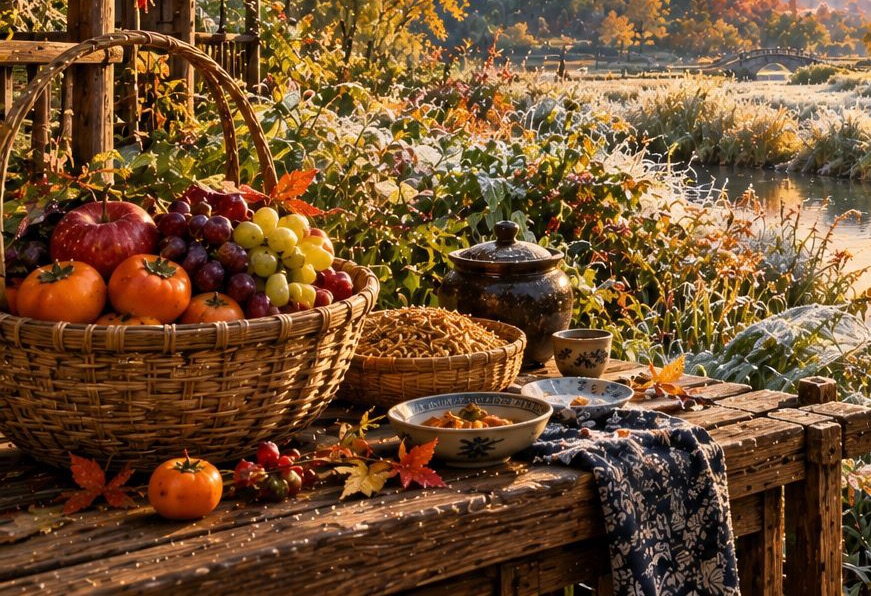
As autumn draws to a close, “Frost Descends” marks the transition from gathering to storing. Nature is beginning to turn inward, and we can follow its example. Take a little time to reflect on what you have achieved this year, appreciate what you have gathered, and gently let go of what you no longer need. As the days shorten, and the clocks change make space for quiet and allow yourself to slow down.
Food & Drink
Our focus now is warmth and nourishment. In Traditional Chinese Medicine, the Spleen supports digestion, while the Lungs are particularly vulnerable to autumn’s cold, dry air. Warm soups, root vegetables, pumpkin, chestnuts and Chinese yam or sweet potato are excellent seasonal choices. Try a gently stewed pear to soothe a dry throat, or try ripe persimmons if it is available. White radish is a useful addition to richer soups and stews. Favour cooked foods and warm drinks over iced drinks and excessive raw foods.
Exercise
Keep moving with brisk walks, jogging over running, gentle stretching, Tai Chi or yoga. Aim to stay comfortably warm without becoming drenched in sweat. If exercising outdoors, change out of damp clothing promptly.
Rest
As the nights draw in, give yourself permission to rest a little more. A regular bedtime and sufficient sleep help you adapt to the changing season.
Lifestyle
Protect your warmth, particularly around your feet, neck and abdomen. As the first frosts arrive, it is time to put away the lighter layers and prepare for winter. A Haramaki or Kidney warmer is a wrap that is worn around the waist and can be really useful in keeping you comfortable.
Seasonal Advice
“Frost Descends” reminds us that preparation is better than rushing to catch up. Gather your strength, nourish yourself gently and make room for the quieter months ahead.
This content is offered to support awareness, not to “fix” you. It reflects a Traditional Chinese Medicine perspective and is for informational purposes only and is not a substitute for individual medical care or a one to one consultation and treatment.
For more information about how Acupuncture and Chinese Medicine can assist you in this season, to make an appointment.
This is the point in autumn when the change in the season becomes much more noticeable. The air is colder, the mornings are darker, and the natural world begins to draw its energy inward.
In Traditional Chinese Medicine (TCM), this is the transition from Warm Dryness to Cool Dryness. It is a time to look after our warmth, protect our Lung Qi, and make sure we continue to nourish the body’s fluids.
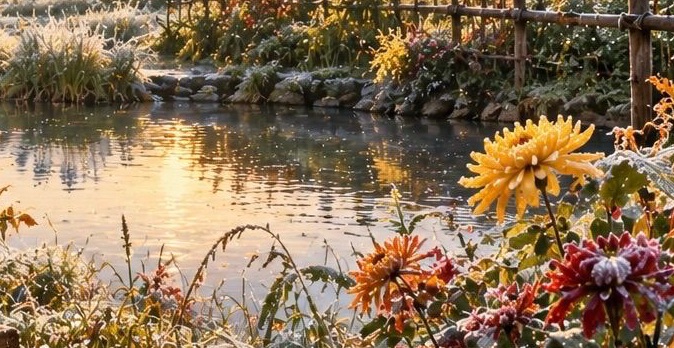
Nature gives us some lovely reminders of this change in the 5 pentads of this Solar Term. The geese complete their journey south, the sparrows disappear as Yang withdraws into Yin, and finally, the chrysanthemums bloom through the frost. Even as the season becomes colder, life continues to adapt.
Mind and Meditation
Autumn is traditionally associated with the Lungs and with grief. As the days shorten, it is easy to become a little more inward-looking. That isn’t necessarily a bad thing. Sometimes we need to slow down and allow ourselves to gather our thoughts.
But don’t let turning inward become isolation. A walk with a friend, a good conversation, or simply spending time with people who make you smile can bring warmth back into the Heart and help keep the spirit lifted.
Food and Drink
Hán Lù is a good time to move away from cold and raw foods and towards warm, cooked, and nourishing meals.
Think soups, stews, porridges, and gently cooked fruit. Pear is particularly useful at this time of year, while sesame, honey, and other naturally sweet foods can help provide nourishment and moisture. The traditional combination of sour and sweet is especially appropriate for autumn: sour flavours help us gather and retain, while sweet flavours nourish.
A little less chilli, raw salad, and iced drinks; a little more warmth, nourishment, and moisture.
Exercise
Keep moving, but don’t feel that every walk needs to be an expedition. Walking, hiking, and gentle outdoor exercise are wonderful ways to open the chest, encourage deeper breathing, and keep the body moving as the weather cools.
There is something particularly valuable about getting outside in autumn, this way we are moving with the season, rather than trying to outrun it.
Rest and Relaxation
The mornings are becoming colder, so give yourself a little time before rushing out of bed. A few gentle stretches while still warm under the covers can help you wake gradually and prepare the body for the cooler air.
In TCM, the Kidney channel begins at the Acupuncture point- Yongquan, “Bubbling Spring”, on the sole of the foot. Keeping the feet warm is therefore a wonderfully simple autumn practice. A warm “root ginger” foot soak before bed can be deeply relaxing and is a lovely way to finish the day.
Lifestyle
Hán Lù encourages us to gather rather than scatter our energy. Nature is slowing down, and perhaps we can allow ourselves to do the same. This doesn’t mean becoming inactive. It means choosing where our energy is best spent and giving ourselves enough warmth, food, rest, and connection to support the months ahead. There is no need to fight autumn.
As the world around us contracts, we can gather ourselves inward, keep warm,
stay connected, and prepare gently for winter.
Blog Disclaimer
This content is offered to support awareness, not to “fix” you. It reflects a Traditional Chinese Medicine perspective and is for informational purposes only and is not a substitute for individual medical care or a one to one consultation and treatment.
For more information about how Acupuncture and Chinese Medicine can assist you in this season, to make an appointment.
Twenty-six years ago, I found myself in Beijing during the Mid-Autumn Festival.
I was there as part of my studies, working in the hospitals, and I remember being completely captivated by the atmosphere of the city that evening.
Families were out together in the warm autumn night, sharing food and tea, looking up at the full moon and simply enjoying being together.
One particular memory has stayed with me.
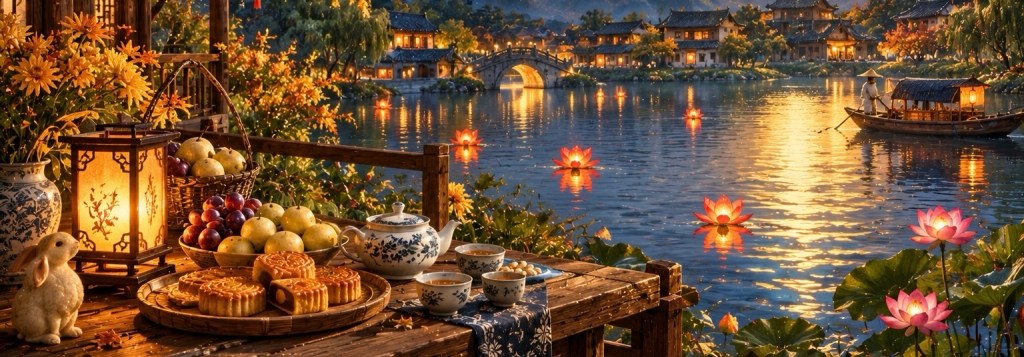
On the lake in Binhai Park, I watched little paper boats, each carrying a candle, gently floating across the water. There was something incredibly beautiful about it. The city was vibrant and alive, yet at the same time there was a wonderful sense of peace.
It was very different from the festivals I had grown up with in the West.
And perhaps that is why, all these years later, I still find myself thinking about the Mid-Autumn Festival.
Nearly a thousand years ago, the Song-dynasty poet Su Shi found himself separated from his younger brother on the night of the Mid-Autumn Festival. He wrote a famous poem expressing the joys and sorrows of life, the pain of meeting and parting, and his hope that, despite their distance, they could both share the beauty of the Moon.
That idea has stayed with people for centuries because it still makes sense today.
We cannot always be together.
But we can still share the same Moon.
And perhaps that is why my memory of Beijing has stayed with me for so long.
When I think back to that night, I don’t particularly remember the details of what I ate or drank.
I remember the people.
I remember families together.
I remember the warm evening air.
I remember the Moon.
And I remember those tiny candles, gently floating across the water in their little paper boats.
So, what is it actually about?
On the fifteenth day of the eighth month of the traditional Chinese calendar, families come together, mooncakes are shared, lanterns are lit and, if the weather is kind, people go outside to admire the full moon.
But the more you look into it, the more you realise that the festival has many layers.
There is the harvest. There is the Moon.
There are ancient stories of gods, immortals and rabbits and there is poetry.
And, perhaps most importantly, there is family.
For people living close to the land, autumn has always been a significant times of the year. Spring is for planting, summer is for growing and autumn is when you finally begin to see the fruits of all that work.
So it is easy to understand why the full Moon of autumn became associated with harvest, gratitude and the natural world.
There is something else about autumn.
The nights begin to draw in, the air changes and we become increasingly aware of the changing seasons. Looking up at a bright full Moon on a clear autumn evening must have been a powerful experience long before there were electric lights, television screens or smartphones to compete for our attention. People watched the Moon.
They celebrated it, wrote about it, drank tea or rice wine beneath it and, over time, surrounded it with stories.
And some of those stories have survived for centuries.
One of the most famous is the story of Chang’e and Hou Yi.
Hou Yi was a legendary archer, and Chang’e was his wife. In the best-known version of the story, Chang’e takes an elixir of immortality and rises to the Moon, leaving Hou Yi behind on Earth.
There, she is said to live with Yutu, the Jade Rabbit, who is traditionally associated with preparing the elixir of immortality.
I love reading these ancient stories and that they have not simply been left in the past, in fact they have travelled all the way into modern China.
China’s lunar exploration programme is named Chang’e, after the woman who is said to have travelled to the Moon, and its lunar rovers include Yutu — the Jade Rabbit.
An ancient story about looking towards the Moon has, in a rather wonderful way, become part of a modern scientific journey towards it.
But for me, the most interesting part of the Mid-Autumn Festival isn’t actually the legend.
It is what the Moon represents.
Look at a full Moon.
It is round, complete and whole.
In Chinese culture, the idea of roundness can also carry the sense of completeness and reunion. So the full Moon became a powerful symbol for people who were separated from one another.
And that makes the festival much more than a celebration of the Moon.
It becomes a celebration of being together.
There is something incredibly human about that.
We all know what it is like to be separated from people we love. Work takes us away. Families move. Circumstances change. Sometimes life simply gets in the way.
But on the night of the Mid-Autumn Festival, wherever you are, you can look up and know that somewhere else, someone you love may be looking at exactly the same Moon.
The Mid-Autumn Festival can mean different things to different people.
For some, it is a celebration of the harvest. For others, it is about the Moon and the ancient stories of Chang’e and Yutu. For a poet, it can be a reminder of love, longing and the people who are far away. But perhaps for many families, it is something much simpler.
It is a time to stop for a moment. To sit together. To share some food and a cup of tea. To look up at the Moon. And perhaps, simply, to say:
“It is time to come home.”
That is the part of the Mid-Autumn Festival that I think I understand now, perhaps more than I did when I was standing beside that lake in Beijing 26 years ago.
The Moon is still there.
The festival is still there.
And wherever we may be, we can still look up at the same bright Moon.
I hope you have a happy, healthy and peaceful Mid-Autumn Festival, and that you get the chance to spend some time with the people who matter to you.