Twenty-six years ago, I found myself in Beijing during the Mid-Autumn Festival.
I was there as part of my studies, working in the hospitals, and I remember being completely captivated by the atmosphere of the city that evening.
Families were out together in the warm autumn night, sharing food and tea, looking up at the full moon and simply enjoying being together.
One particular memory has stayed with me.
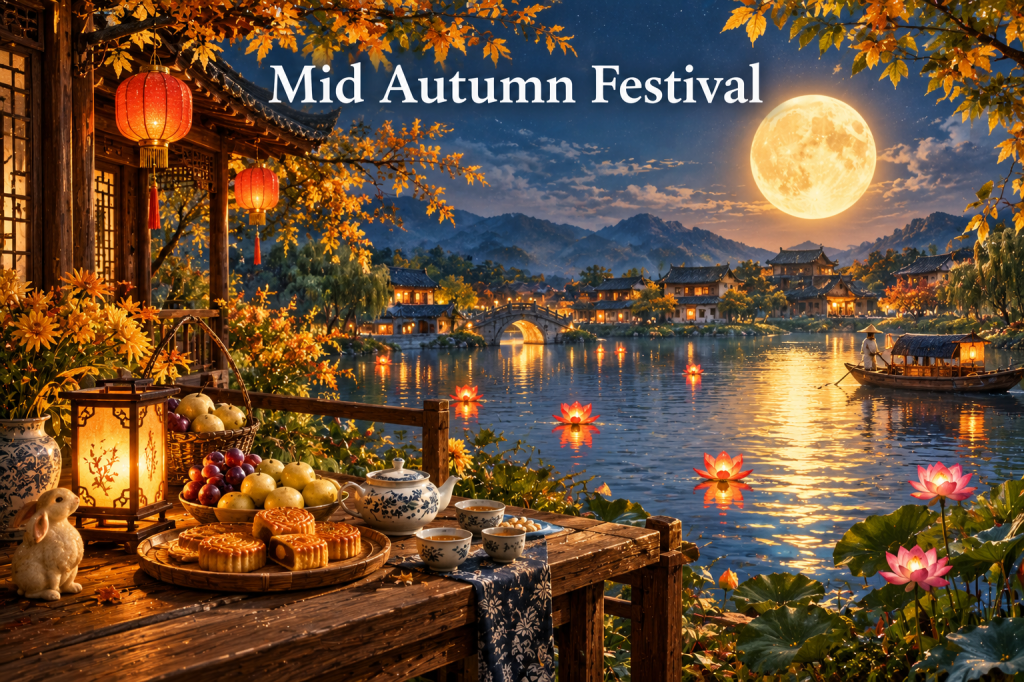
On the lake in Binhai Park, I watched little paper boats, each carrying a candle, gently floating across the water. There was something incredibly beautiful about it. The city was vibrant and alive, yet at the same time there was a wonderful sense of peace.
It was very different from the festivals I had grown up with in the West.
And perhaps that is why, all these years later, I still find myself thinking about the Mid-Autumn Festival.
Nearly a thousand years ago, the Song-dynasty poet Su Shi found himself separated from his younger brother on the night of the Mid-Autumn Festival. He wrote a famous poem expressing the joys and sorrows of life, the pain of meeting and parting, and his hope that, despite their distance, they could both share the beauty of the Moon.
That idea has stayed with people for centuries because it still makes sense today.
We cannot always be together.
But we can still share the same Moon.
And perhaps that is why my memory of Beijing has stayed with me for so long.
When I think back to that night, I don’t particularly remember the details of what I ate or drank.
I remember the people.
I remember families together.
I remember the warm evening air.
I remember the Moon.
And I remember those tiny candles, gently floating across the water in their little paper boats.
So, what is it actually about?
On the fifteenth day of the eighth month of the traditional Chinese calendar, families come together, mooncakes are shared, lanterns are lit and, if the weather is kind, people go outside to admire the full moon.
But the more you look into it, the more you realise that the festival has many layers.
There is the harvest. There is the Moon.
There are ancient stories of gods, immortals and rabbits and there is poetry.
And, perhaps most importantly, there is family.
For people living close to the land, autumn has always been a significant times of the year. Spring is for planting, summer is for growing and autumn is when you finally begin to see the fruits of all that work.
So it is easy to understand why the full Moon of autumn became associated with harvest, gratitude and the natural world.
There is something else about autumn.
The nights begin to draw in, the air changes and we become increasingly aware of the changing seasons. Looking up at a bright full Moon on a clear autumn evening must have been a powerful experience long before there were electric lights, television screens or smartphones to compete for our attention. People watched the Moon.
They celebrated it, wrote about it, drank tea or rice wine beneath it and, over time, surrounded it with stories.
And some of those stories have survived for centuries.
One of the most famous is the story of Chang’e and Hou Yi.
Hou Yi was a legendary archer, and Chang’e was his wife. In the best-known version of the story, Chang’e takes an elixir of immortality and rises to the Moon, leaving Hou Yi behind on Earth.
There, she is said to live with Yutu, the Jade Rabbit, who is traditionally associated with preparing the elixir of immortality.
I love reading these ancient stories and that they have not simply been left in the past, in fact they have travelled all the way into modern China.
China’s lunar exploration programme is named Chang’e, after the woman who is said to have travelled to the Moon, and its lunar rovers include Yutu — the Jade Rabbit.
An ancient story about looking towards the Moon has, in a rather wonderful way, become part of a modern scientific journey towards it.
But for me, the most interesting part of the Mid-Autumn Festival isn’t actually the legend.
It is what the Moon represents.
Look at a full Moon.
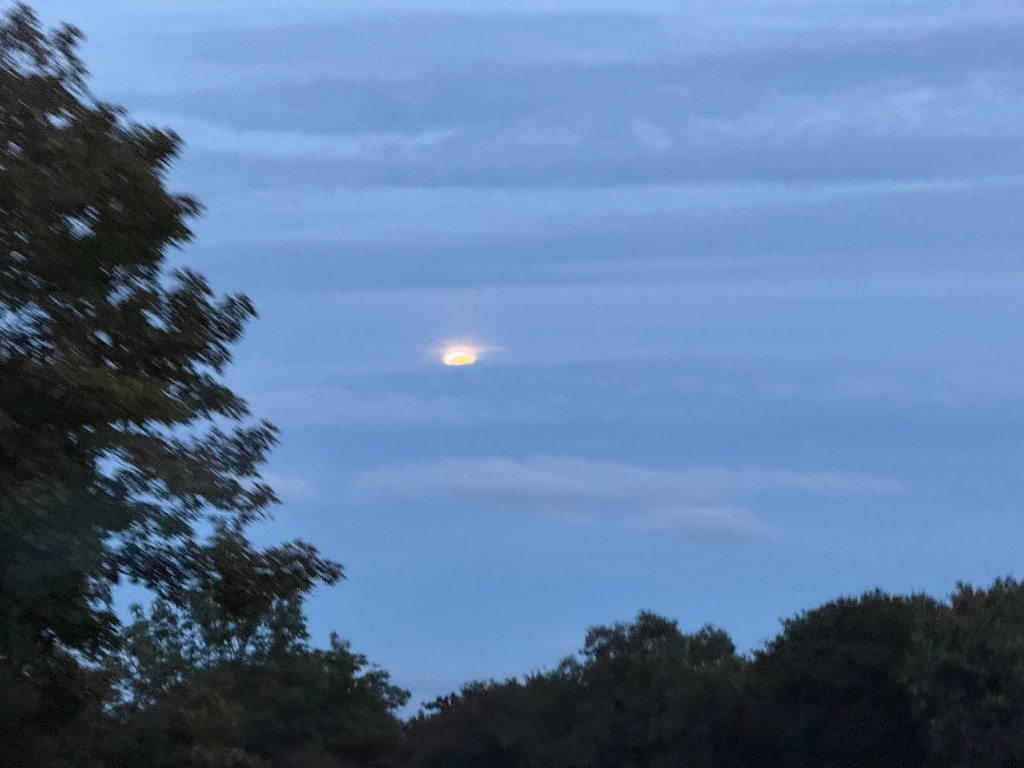
It is round, complete and whole.
In Chinese culture, the idea of roundness can also carry the sense of completeness and reunion. So the full Moon became a powerful symbol for people who were separated from one another.
And that makes the festival much more than a celebration of the Moon.
It becomes a celebration of being together.
There is something incredibly human about that.
We all know what it is like to be separated from people we love. Work takes us away. Families move. Circumstances change. Sometimes life simply gets in the way.
But on the night of the Mid-Autumn Festival, wherever you are, you can look up and know that somewhere else, someone you love may be looking at exactly the same Moon.
The Mid-Autumn Festival can mean different things to different people.
For some, it is a celebration of the harvest. For others, it is about the Moon and the ancient stories of Chang’e and Yutu. For a poet, it can be a reminder of love, longing and the people who are far away. But perhaps for many families, it is something much simpler.
It is a time to stop for a moment. To sit together. To share some food and a cup of tea. To look up at the Moon. And perhaps, simply, to say:
“It is time to come home.”
That is the part of the Mid-Autumn Festival that I think I understand now, perhaps more than I did when I was standing beside that lake in Beijing 26 years ago.
The Moon is still there.
The festival is still there.
And wherever we may be, we can still look up at the same bright Moon.
I hope you have a happy, healthy and peaceful Mid-Autumn Festival, and that you get the chance to spend some time with the people who matter to you.
Happy Mid-Autumn Festival, from your Friend
Dan the Acupuncturist