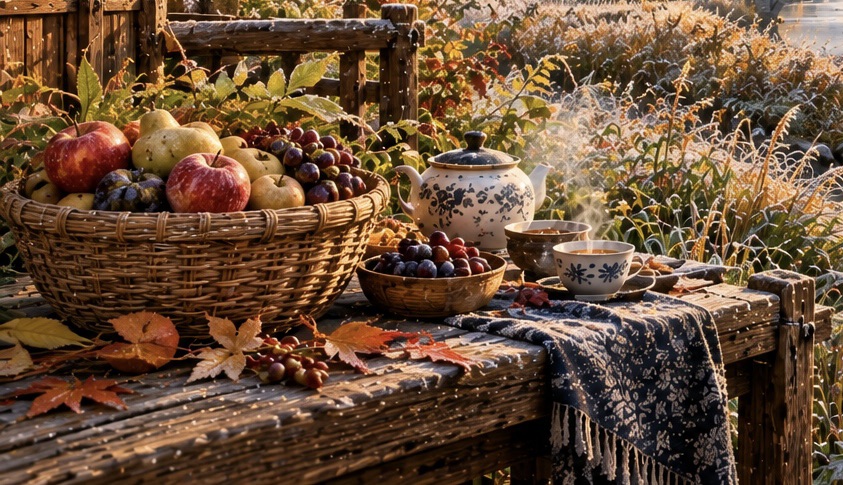
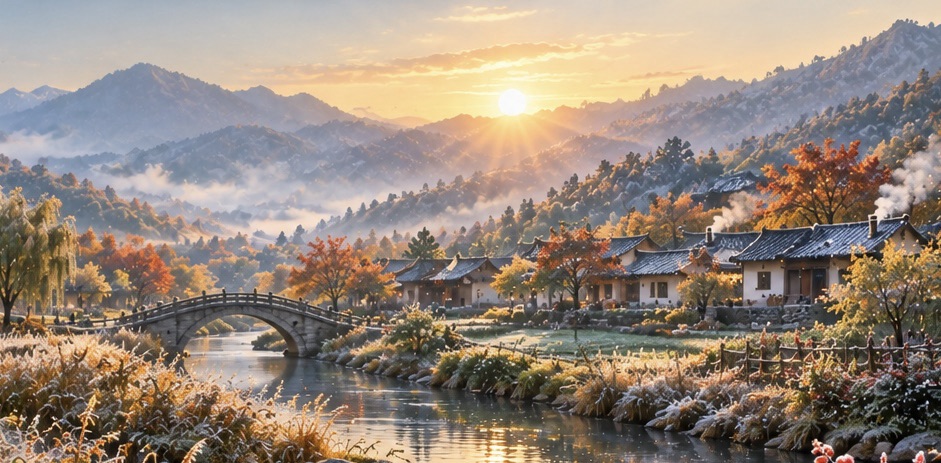
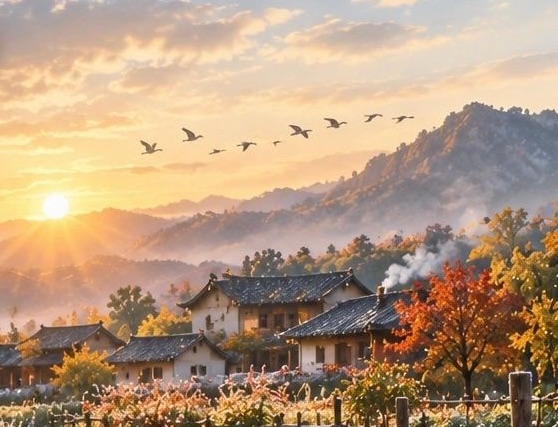
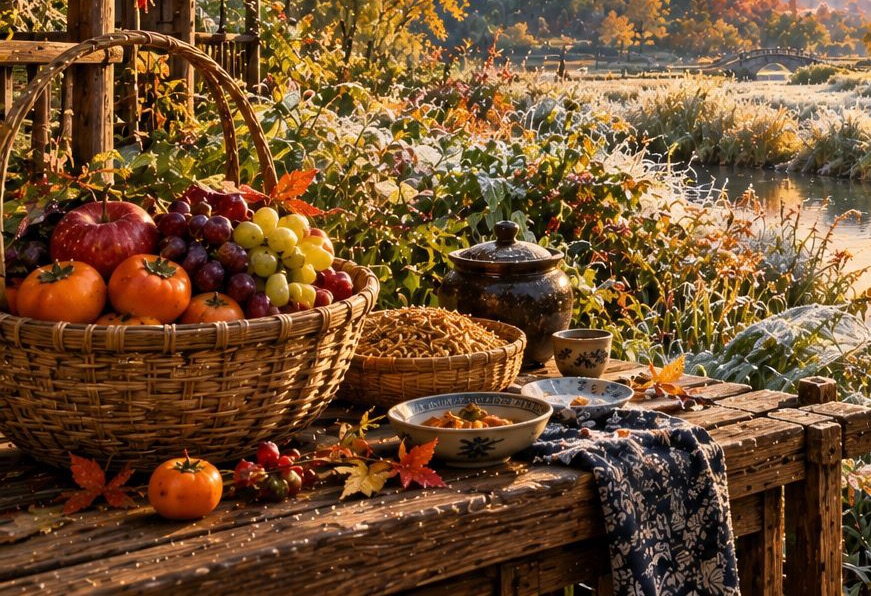
As autumn draws to a close, “Frost Descends” marks the transition from gathering to storing. Nature is beginning to turn inward, and we can follow its example. Take a little time to reflect on what you have achieved this year, appreciate what you have gathered, and gently let go of what you no longer need. As the days shorten, and the clocks change make space for quiet and allow yourself to slow down.
Food & Drink
Our focus now is warmth and nourishment. In Traditional Chinese Medicine, the Spleen supports digestion, while the Lungs are particularly vulnerable to autumn’s cold, dry air. Warm soups, root vegetables, pumpkin, chestnuts and Chinese yam or sweet potato are excellent seasonal choices. Try a gently stewed pear to soothe a dry throat, or try ripe persimmons if it is available. White radish is a useful addition to richer soups and stews. Favour cooked foods and warm drinks over iced drinks and excessive raw foods.
Exercise
Keep moving with brisk walks, jogging over running, gentle stretching, Tai Chi or yoga. Aim to stay comfortably warm without becoming drenched in sweat. If exercising outdoors, change out of damp clothing promptly.
Rest
As the nights draw in, give yourself permission to rest a little more. A regular bedtime and sufficient sleep help you adapt to the changing season.
Lifestyle
Protect your warmth, particularly around your feet, neck and abdomen. As the first frosts arrive, it is time to put away the lighter layers and prepare for winter. A Haramaki or Kidney warmer is a wrap that is worn around the waist and can be really useful in keeping you comfortable.
Seasonal Advice
“Frost Descends” reminds us that preparation is better than rushing to catch up. Gather your strength, nourish yourself gently and make room for the quieter months ahead.
This content is offered to support awareness, not to “fix” you. It reflects a Traditional Chinese Medicine perspective and is for informational purposes only and is not a substitute for individual medical care or a one to one consultation and treatment.
For more information about how Acupuncture and Chinese Medicine can assist you in this season, to make an appointment.
This is the point in autumn when the change in the season becomes much more noticeable. The air is colder, the mornings are darker, and the natural world begins to draw its energy inward.
In Traditional Chinese Medicine (TCM), this is the transition from Warm Dryness to Cool Dryness. It is a time to look after our warmth, protect our Lung Qi, and make sure we continue to nourish the body’s fluids.
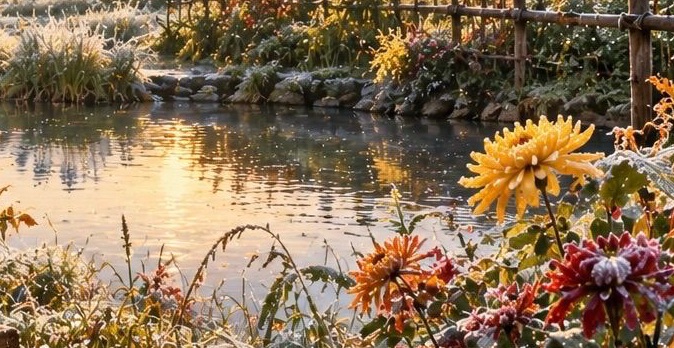
Nature gives us some lovely reminders of this change in the 5 pentads of this Solar Term. The geese complete their journey south, the sparrows disappear as Yang withdraws into Yin, and finally, the chrysanthemums bloom through the frost. Even as the season becomes colder, life continues to adapt.
Mind and Meditation
Autumn is traditionally associated with the Lungs and with grief. As the days shorten, it is easy to become a little more inward-looking. That isn’t necessarily a bad thing. Sometimes we need to slow down and allow ourselves to gather our thoughts.
But don’t let turning inward become isolation. A walk with a friend, a good conversation, or simply spending time with people who make you smile can bring warmth back into the Heart and help keep the spirit lifted.
Food and Drink
Hán Lù is a good time to move away from cold and raw foods and towards warm, cooked, and nourishing meals.
Think soups, stews, porridges, and gently cooked fruit. Pear is particularly useful at this time of year, while sesame, honey, and other naturally sweet foods can help provide nourishment and moisture. The traditional combination of sour and sweet is especially appropriate for autumn: sour flavours help us gather and retain, while sweet flavours nourish.
A little less chilli, raw salad, and iced drinks; a little more warmth, nourishment, and moisture.
Exercise
Keep moving, but don’t feel that every walk needs to be an expedition. Walking, hiking, and gentle outdoor exercise are wonderful ways to open the chest, encourage deeper breathing, and keep the body moving as the weather cools.
There is something particularly valuable about getting outside in autumn, this way we are moving with the season, rather than trying to outrun it.
Rest and Relaxation
The mornings are becoming colder, so give yourself a little time before rushing out of bed. A few gentle stretches while still warm under the covers can help you wake gradually and prepare the body for the cooler air.
In TCM, the Kidney channel begins at the Acupuncture point- Yongquan, “Bubbling Spring”, on the sole of the foot. Keeping the feet warm is therefore a wonderfully simple autumn practice. A warm “root ginger” foot soak before bed can be deeply relaxing and is a lovely way to finish the day.
Lifestyle
Hán Lù encourages us to gather rather than scatter our energy. Nature is slowing down, and perhaps we can allow ourselves to do the same. This doesn’t mean becoming inactive. It means choosing where our energy is best spent and giving ourselves enough warmth, food, rest, and connection to support the months ahead. There is no need to fight autumn.
As the world around us contracts, we can gather ourselves inward, keep warm,
stay connected, and prepare gently for winter.
Blog Disclaimer
This content is offered to support awareness, not to “fix” you. It reflects a Traditional Chinese Medicine perspective and is for informational purposes only and is not a substitute for individual medical care or a one to one consultation and treatment.
For more information about how Acupuncture and Chinese Medicine can assist you in this season, to make an appointment.
Twenty-six years ago, I found myself in Beijing during the Mid-Autumn Festival.
I was there as part of my studies, working in the hospitals, and I remember being completely captivated by the atmosphere of the city that evening.
Families were out together in the warm autumn night, sharing food and tea, looking up at the full moon and simply enjoying being together.
One particular memory has stayed with me.
On the lake in Binhai Park, I watched little paper boats, each carrying a candle, gently floating across the water. There was something incredibly beautiful about it. The city was vibrant and alive, yet at the same time there was a wonderful sense of peace.
It was very different from the festivals I had grown up with in the West.
And perhaps that is why, all these years later, I still find myself thinking about the Mid-Autumn Festival.
Nearly a thousand years ago, the Song-dynasty poet Su Shi found himself separated from his younger brother on the night of the Mid-Autumn Festival. He wrote a famous poem expressing the joys and sorrows of life, the pain of meeting and parting, and his hope that, despite their distance, they could both share the beauty of the Moon.
That idea has stayed with people for centuries because it still makes sense today.
We cannot always be together.
But we can still share the same Moon.
And perhaps that is why my memory of Beijing has stayed with me for so long.
When I think back to that night, I don’t particularly remember the details of what I ate or drank.
I remember the people.
I remember families together.
I remember the warm evening air.
I remember the Moon.
And I remember those tiny candles, gently floating across the water in their little paper boats.
So, what is it actually about?
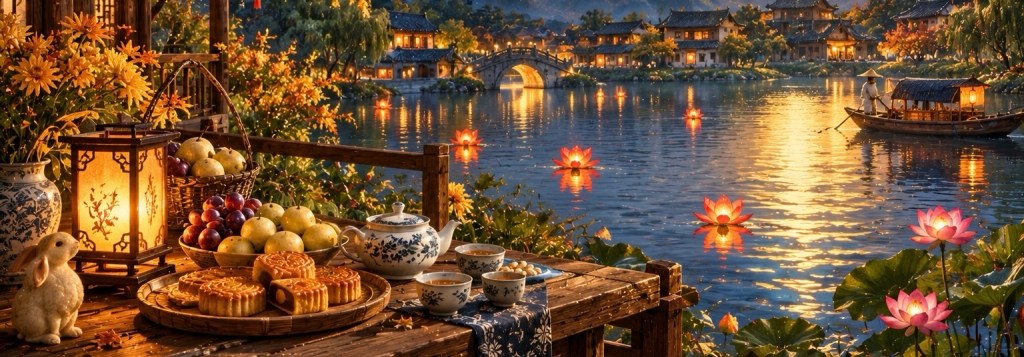
On the fifteenth day of the eighth month of the traditional Chinese calendar, families come together, mooncakes are shared, lanterns are lit and, if the weather is kind, people go outside to admire the full moon.
But the more you look into it, the more you realise that the festival has many layers.
There is the harvest. There is the Moon.
There are ancient stories of gods, immortals and rabbits and there is poetry.
And, perhaps most importantly, there is family.
For people living close to the land, autumn has always been a significant times of the year. Spring is for planting, summer is for growing and autumn is when you finally begin to see the fruits of all that work.
So it is easy to understand why the full Moon of autumn became associated with harvest, gratitude and the natural world.
There is something else about autumn.
The nights begin to draw in, the air changes and we become increasingly aware of the changing seasons. Looking up at a bright full Moon on a clear autumn evening must have been a powerful experience long before there were electric lights, television screens or smartphones to compete for our attention. People watched the Moon.
They celebrated it, wrote about it, drank tea or rice wine beneath it and, over time, surrounded it with stories.
And some of those stories have survived for centuries.
One of the most famous is the story of Chang’e and Hou Yi.
Hou Yi was a legendary archer, and Chang’e was his wife. In the best-known version of the story, Chang’e takes an elixir of immortality and rises to the Moon, leaving Hou Yi behind on Earth.
There, she is said to live with Yutu, the Jade Rabbit, who is traditionally associated with preparing the elixir of immortality.
I love reading these ancient stories and that they have not simply been left in the past, in fact they have travelled all the way into modern China.
China’s lunar exploration programme is named Chang’e, after the woman who is said to have travelled to the Moon, and its lunar rovers include Yutu — the Jade Rabbit.
An ancient story about looking towards the Moon has, in a rather wonderful way, become part of a modern scientific journey towards it.
But for me, the most interesting part of the Mid-Autumn Festival isn’t actually the legend.
It is what the Moon represents.
Look at a full Moon.
It is round, complete and whole.
In Chinese culture, the idea of roundness can also carry the sense of completeness and reunion. So the full Moon became a powerful symbol for people who were separated from one another.
And that makes the festival much more than a celebration of the Moon.
It becomes a celebration of being together.
There is something incredibly human about that.
We all know what it is like to be separated from people we love. Work takes us away. Families move. Circumstances change. Sometimes life simply gets in the way.
But on the night of the Mid-Autumn Festival, wherever you are, you can look up and know that somewhere else, someone you love may be looking at exactly the same Moon.
The Mid-Autumn Festival can mean different things to different people.
For some, it is a celebration of the harvest. For others, it is about the Moon and the ancient stories of Chang’e and Yutu. For a poet, it can be a reminder of love, longing and the people who are far away. But perhaps for many families, it is something much simpler.
It is a time to stop for a moment. To sit together. To share some food and a cup of tea. To look up at the Moon. And perhaps, simply, to say:
“It is time to come home.”
That is the part of the Mid-Autumn Festival that I think I understand now, perhaps more than I did when I was standing beside that lake in Beijing 26 years ago.
The Moon is still there.
The festival is still there.
And wherever we may be, we can still look up at the same bright Moon.
I hope you have a happy, healthy and peaceful Mid-Autumn Festival, and that you get the chance to spend some time with the people who matter to you.
Qiu Fēn, the Autumn Equinox, marks a moment of balance as Yin begins to grow and Yang gradually declines. In TCM, autumn is a time of Shōu – gathering and drawing inward.
Mind and Meditation
Use the shortening days as a natural cue to slow down, reduce stimulation and make space for reflection. Gentle breathing, meditation, quiet evenings and meaningful connection can help settle the mind and ease the tendency towards Autumn Sadness.
Autumn is about honouring the Moon. As the sun sets, dim your lights and put screens away, Step outside for a few minutes, let the evening air and fading light signal to your body: the active day is done. Taking time to sit quietly, watch the cool silver light, and slow the mind is a practical way to calm the Shen (Spirit) and reduce restless outward desires, support the body’s natural shift from spending energy to preserving it.
Food and Drink
As Autumn Dryness begins to increase, shift away from the cooling, dispersing foods of summer towards moistening and nourishing foods. Pears, apples, root vegetables, squashes, Sweet potato, walnuts, honey, soups and congee (Rice Porridge) are traditionally used to support Yin and body fluids. Reduce excessive chilli, garlic, raw foods, iced drinks and heavily fried foods. The traditional principle is “less pungent (spicy), more sour” This helps conserve rather than disperse energy.
Exercise
Choose moderate, steady movement rather than exhausting exercise. Walking, stretching – especially opening the chest to allow the lungs to open, mobility work, gentle Qi Gong and breathing exercises are particularly appropriate. Avoid excessive sweating and protect the joints, neck and chest as cooler weather arrives.
Rest and Relaxation
Begin moving towards earlier nights and calmer evenings. Dim lights, reduce screen time, take a warm Orange peel and Ginger root foot baths and practise gentle stretching or breathing before bed using Citrus Aromatherapy oils to defend against Autumn Sadness. Keep the bedroom comfortably warm and avoid becoming chilled.
Lifestyle
Qiu Fēn invites us to gather our resources and prepare for winter. Enjoy daylight, protect yourself from wind and cold, keep your feet warm and make time for family, friends and community. And protect the Gate of the Wind (acu-point – Da Zhui) by wearing a scarf.
Seasonal Treatment
In TCM, autumn is associated with the Lung and Metal element. Seasonal treatment focuses on supporting Lung Qi (chi / Energy), Yin and the body’s protective Qi, while helping the body adapt from summer’s outward energy towards winter’s inward stillness.
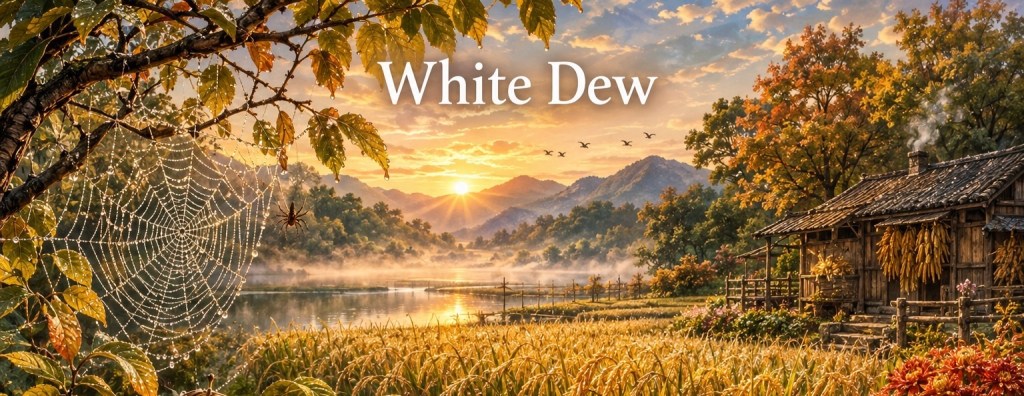
White Dew marks a decisive shift into autumn. Although afternoons may still feel warm, cooler nights and morning dews tell us that summer’s Yang Qi (Chi) is retreating inward and Yin Qi is growing stronger.
In TCM, this is the transition from the lingering Warm Dryness of summer to the Cool Dryness of Autumn, – which produces a combination of cold type symptoms (chills, no sweating, headache) and dryness symptoms (dry nose, dry throat, dry cough).
The focus now is on protecting the Lungs from dryness and supporting the Spleen and Stomach from the increasing cold.
Over the next fifteen days in nature, birds sensing the increasing cold before we do: the wild geese migrate south to protect their warmth; swallows retreat from the cooling skies; and other birds begin storing food for winter. In the same way, TCM encourages us to gradually withdraw our energy inward, protect our warmth, and nourish our bodies by building up our reserves in preparation for the colder months ahead.
Mind and Meditation
Autumn invites us to slow down and gather our energy. Spend a few quiet minutes each day breathing gently and noticing the seasonal change. Ask yourself: What do I need to gather, protect and bring back inside? And what do I need to let go of?
Food and Drink
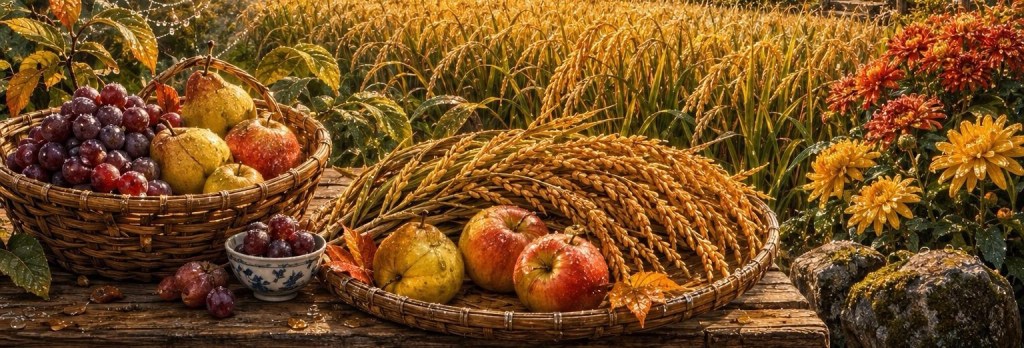
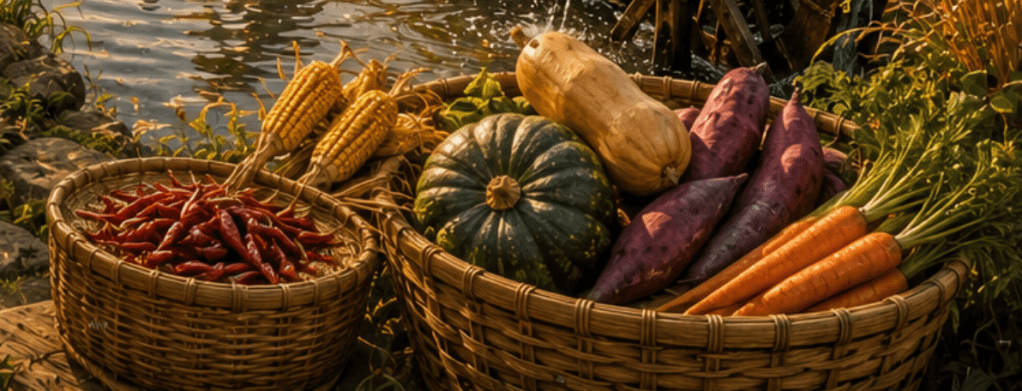
Choose warm, nourishing, easy-to-digest meals: soups, porridges, pumpkin, yam and millet. Pear and mushroom can help provide gentle moisture. Longan is traditionally enjoyed at White Dew for its warming, nourishing qualities.
Reduce iced drinks, raw summer foods, very spicy foods and heavy meals. Consider moving from cooling Green tea to warming Oolong as the season changes.
Exercise
Keep moving, but adapt to cooler mornings and evenings. Walking, running, mobility work, Tai Chi and Qigong are ideal. Warm up properly and avoid becoming chilled after exercise.
Rest
Protect your sleep – in fact try and sleep 1 hour longer than you did during the Summer. Keep your neck, abdomen, lower back and feet comfortably warm. Don’t rush into winter clothing, but don’t treat September as midsummer either.
Lifestyle
The traditional message is simple: protect what summer left exposed. Use layers, avoid cold drafts by closing windows at night and allow your body to gradually adapt.
Seasonal Treatment Advice
This is a good time to support Lung Qi and Yin, strengthen the Spleen and Stomach, and help the body transition from outward summer activity towards autumn’s inward, conserving energy.
White Dew reminds us: warm the digestion, moisten the Lungs,
protect the body and begin gently gathering your energy for winter.
Blog Disclaimer
This content is offered to support awareness, not to “fix” you. It reflects a Traditional Chinese Medicine perspective and is for informational purposes only—and is not a substitute for individual medical care or a one to one consultation and treatment.
For more information about how Acupuncture and Chinese Medicine can assist you in this season, to make an appointment.
Have you noticed that subtle crispness in the morning air? Chùshǔ, meaning “End of Heat”, marks summer’s gentle turning towards autumn. Although warm days may linger, nature is beginning to draw inward. It’s a time for us too, to slow down, settle, conserve energy and prepare for the season ahead.
Mind and Meditation
Chùshǔ or the “End of Heat” marks the shift from summer’s outward energy to autumn’s quieter, inward movement. Begin to settle, gather and let go. Slow your breathing, clear mental clutter and consider what you no longer need to carry into the colder months.
Food and Drink
Follow the principle of “gentle clearing, soft moistening”. Summer may have left Dampness, whilst autumn brings increasing dryness. Choose pears, apples, grapes, lotus root, lemon white foods and sour& sweet flavours like home made lemonade, these support body fluids and the Lungs. Duck and fresh fish provide nourishing protein without being overly heavy. Reduce iced drinks and very cold foods, particularly melons, and favour warm, gently cooked meals.
Exercise
Gradually reduce very strenuous, heavy sweat-producing exercise. Aim for gentle movement and light sweating. Walking, running at an easy pace, Qi Gong, Yoga, stretching and moderate strength work help maintain movement without exhausting your reserves.
Rest
Autumn asks us to conserve energy. Allow a little more sleep and recovery time where possible. Protect yourself from sudden chills, particularly around the abdomen and lower back.
Lifestyle
Practise “the art of settling”. Clear clutter, simplify commitments and finish what no longer needs carrying forward. Remember the “Autumn Tiger”: warm weather can return suddenly, so adapt gradually rather than rushing into autumn routines.
Seasonal Treatment Advice
“End of Heat” brings attention to the Lungs and Spleen. Support Spleen Qi and gently resolve lingering Dampness whilst nourishing Yin and Body Fluids to protect against autumn dryness. The key is balance: clear gently, nourish softly and begin gathering your energy inward for winter.
Disclaimer
This content is offered to support awareness, not to “fix” you. It reflects a Traditional Chinese Medicine perspective and is for informational purposes only—and is not a substitute for individual medical care or a one to one consultation and treatment.
For more information about how Acupuncture and Chinese Medicine can assist you in this season, please make an appointment
Although the weather may still feel like the height of summer, Lì Qiū marks the energetic beginning of autumn. In Traditional Chinese Medicine (TCM), this is a time of transition. The heat has not completely gone, but nature has already begun drawing its energy inward, inviting us to slow down and prepare for the cooler months ahead.
Mind & Meditation
Autumn is associated with the Metal Element and the Lungs, bringing a natural time for reflection and letting go. Gentle breathing exercises, meditation or a walk in nature can help calm the mind. Walking somewhere with an open view and taking a few deep breaths is a wonderful way to expand the chest and support healthy Lung Qi.
Food & Drink
For the first few weeks of autumn, think “clear first, then nourish.” Choose foods that gently clear lingering summer heat while moistening the lungs, such as pears, lotus root, cauliflower, daikon radish and Tremella (white fungus). Reduce very spicy foods, which encourage sweating and dryness, and enjoy gentle sour flavours like lemon or plums to help preserve body fluids.
Exercise
Continue regular exercise but avoid overheating. Walking, Tai Chi, Qi Gong or gentle strengthening exercises are ideal. The aim is to stay active while gradually reducing the intensity of summer.
Rest
As daylight slowly shortens, begin settling into an earlier bedtime where possible. Good sleep helps replenish Yin and supports the body’s natural seasonal rhythm.
Lifestyle
A traditional practice known as “Autumn Freeze” encourages us not to rush into heavy winter clothing, allowing the body to gradually adapt to cooler temperatures. However, always keep your neck, abdomen and feet warm, and if you have cardiovascular, digestive or circulatory conditions, prioritise staying comfortably warm.
Seasonal Treatment Advice
Lì Qiū is an excellent time for seasonal acupuncture. Treatment can help clear lingering summer heat, support Lung Qi, strengthen your immune system and prepare your body for autumn. By working with the changing season rather than waiting for symptoms to appear, we can help maintain balance and wellbeing throughout the months ahead.
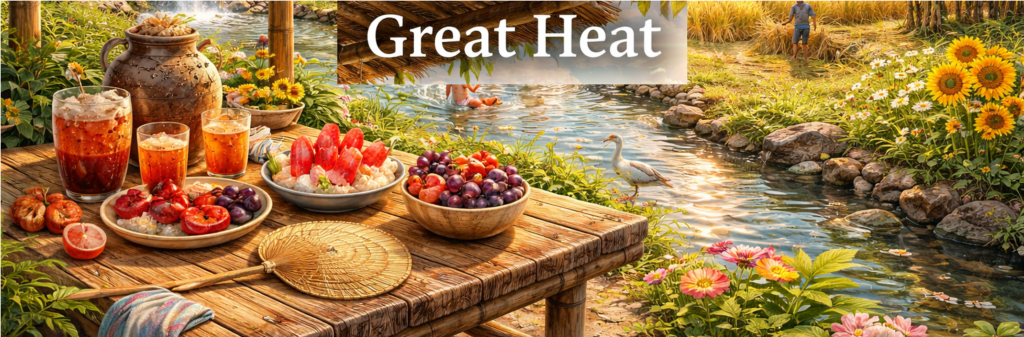
Da Shu, meaning Major Heat, is the hottest and most humid Solar Term of the year. In Traditional Chinese Medicine (TCM), Yang energy reaches its annual peak, yet beneath the surface the body’s digestive fire can become weakened. Excessive heat, humidity and sweating place the greatest strain on the Heart and Spleen, leaving many people feeling tired, heavy, irritable and mentally drained.
Mind and Meditation
High temperatures can agitate the Heart, causing restlessness, poor sleep and irritability. Slow the pace of life where possible and make time for meditation, gentle breathing or quiet reflection. Even a short period of calm each day can help cool the mind and restore emotional balance.
Food and Drink
Choose light, freshly prepared meals that help clear Heat and reduce Dampness. Foods such as winter melon, tomatoes, watermelon, bitter greens and adzuki beans are particularly beneficial. Drink regularly throughout the day but avoid excessive iced drinks, which can weaken digestion. Room-temperature or lightly warm drinks are kinder to the Spleen than ice-cold beverages.
Exercise
Exercise only during the coolest parts of the day, such as early morning or evening. Walking, Tai Chi, Qi Gong and gentle swimming are ideal. Avoid strenuous activity in the midday sun, as excessive sweating depletes the body’s fluids and places additional stress on the Heart.
Rest
Listen to your body’s need for rest. A short midday break of 10–20 minutes helps replenish energy during the hottest weeks of the year. Aim for a regular sleep routine and avoid staying up late, allowing the body time to recover from the day’s heat.
Lifestyle
Keep your home comfortably cool without overusing air conditioning. Large temperature differences between outdoors and indoors can place unnecessary stress on the body. Maintain good ventilation and reduce indoor humidity where possible. Wear loose, breathable natural fabrics and avoid prolonged exposure to direct sunshine.
Seasonal Advice
Da Shu reminds us that true cooling comes from balance rather than extremes. Instead of shocking the body with ice-cold drinks or excessive air conditioning, support your Heart and Spleen with gentle cooling foods, adequate rest and moderate activity. This is also the traditional season to strengthen the body’s Yang through treatments such as moxibustion during the San Fu period, helping prepare the body for the colder months ahead.
Disclaimer
This content is offered to support awareness, not to “fix” you. It reflects a Traditional Chinese Medicine perspective and is for informational purposes only—and is not a substitute for individual medical care or a one to one consultation and treatment.
For more information about how Acupuncture and Chinese Medicine can assist you in this season, please make an appointment
Xiao Shu, meaning Slight Heat, marks the beginning of the hottest and most humid period of the summer, known as the “Dog Days” or “San Fu Tian” lasting until the end of August. In Traditional Chinese Medicine (TCM), this combination of Heat and Dampness can leave us feeling tired, heavy and restless while placing extra strain on the Heart and Spleen.
Mind and Meditation
The summer heat can make us feel irritable or unsettled. Take time each day for quiet reflection, meditation or slow breathing. Gentle activities that calm the mind, help keep the Heart balanced.
Food and Drink
Although iced drinks are tempting, they can weaken digestion (TCM spleen), choose warm or room temperature drinks instead and eat light, seasonal meals. Include foods that gently clear heat and dampness, such as lotus root, mung beans, (please ask for Recipes). Reduce greasy foods, excess chilli and large, heavy meals.
Green tea with mint, chrysanthemum and watermelon rind tea can help cool the body while remaining gentle on digestion. While a morning warming ginger tea can gently support the spleen.
Exercise
Exercise during the cooler parts of the day, preferably early morning or late evening. Gentle exercise such as walking, Tai Chi, Qi Gong or swimming are ideal. Avoid intense workouts that cause excessive sweating, as this can deplete the body’s energy and fluids, aim for a fluid movement and a gentle glow of sweat.
Rest
Aim to be asleep before 11pm and, if possible, enjoy a short rest around midday of about twenty minutes, this could be a quiet relaxation, helping restore energy during the hottest weeks of summer.
Lifestyle
Humidity is just as important as heat during Xiao Shu. Keep your home well ventilated, dry bedding thoroughly in the sunshine and avoid cold air blowing directly onto your abdomen. Sip water regularly throughout the day rather than drinking large amounts in one go.
Clothing
Wear loose-fitting, light-coloured clothing made from natural fibres such as cotton or linen. Long breathable garments protects you from the sun while allowing sweat to evaporate slowly, helping you stay cooler.
Seasonal Advice
The key to Xiao Shu is balance. Although the weather is hot, your digestive system (TCM Spleen) benefits from warmth and gentle care. Eat lightly, rest when needed, move gently and avoid overcooling the body.
By following nature’s rhythm during this Solar Term it will help you maintain energy and wellbeing throughout the height of summer.
Treatment Advice
If you naturally have a Yang deficiency (Yang deficiency in Traditional Chinese Medicine: Characterised by insufficient warming energy, causing coldness, fatigue, sluggishness, pale complexion, weak circulation, and oedema.) Why not book in for – for a speciality treatment of – “treating winter conditions in the summer”
Disclaimer
This content is offered to support awareness, not to “fix” you. It reflects a Traditional Chinese Medicine perspective and is for informational purposes only—and is not a substitute for individual medical care or a one to one consultation and treatment.
For more information about how Acupuncture and Chinese Medicine can assist you in this season, please make an appointment.
The Summer Solstice marks the longest day of the year and the peak of Yang energy. Nature is at its most expansive, vibrant, and outwardly active. Yet within this peak lies the first stirrings of Yin. Ancient Chinese wisdom teaches that when anything reaches its zenith, it begins to transform into its opposite.
While the world appears full of heat and activity, this is also the moment to begin conserving energy and protecting the body’s fluids.
The Heart, associated with the Fire element and Summer, is at its strongest influence during this period. Excess heat, overexertion, and emotional agitation can disturb the Shen (Spirit), leading to restlessness, irritability, poor sleep, and mental overactivity.
Mind A time to cultivate calm within activity. Although the season encourages socialising and outward expression, balance comes from moments of stillness and reflection. Protect the Shen by avoiding excessive stimulation, emotional drama, and overcommitment. Quiet meditation, mindfulness and gratitude practices.
Spending peaceful time in nature help anchor the Heart and maintain emotional balance.
Exercise Continue to move the body, but avoid exercising in the strongest heat of the day. Early morning and evening are ideal. Walking, Tai Chi, swimming, gentle cycling, and moderate outdoor activity help circulate Qi without exhausting body fluids or overheating the Heart. Excessive sweating should be avoided, as it depletes both Qi and Yin.
Food Choose foods that gently clear Heat, nourish fluids, and support digestion. Watermelon, cucumber, lettuce, celery, courgette, tofu, mung beans, berries, and lightly cooked seasonal vegetables are excellent choices. Bitter foods such as rocket, chicory, and pak choi can help clear excess Heart Fire. Avoid excessive spicy foods, alcohol, greasy meals, and overeating, all of which can generate additional internal heat.
Clothing Wear loose, breathable clothing made from natural fibres that allow heat to disperse. Protect yourself from prolonged exposure to strong midday sun, and stay hydrated throughout the day. While keeping cool is important, avoid excessive use of air conditioning or ice-cold drinks, as sudden cold can weaken digestion and disrupt the body’s natural balance.
The Character of Xia Zhi: At the height of Yang, begin nurturing Yin.
Remain active, but do not exhaust yourself.
Remain bright, but cultivate inner stillness.
In the longest days of the year, the greatest wisdom is moderation.